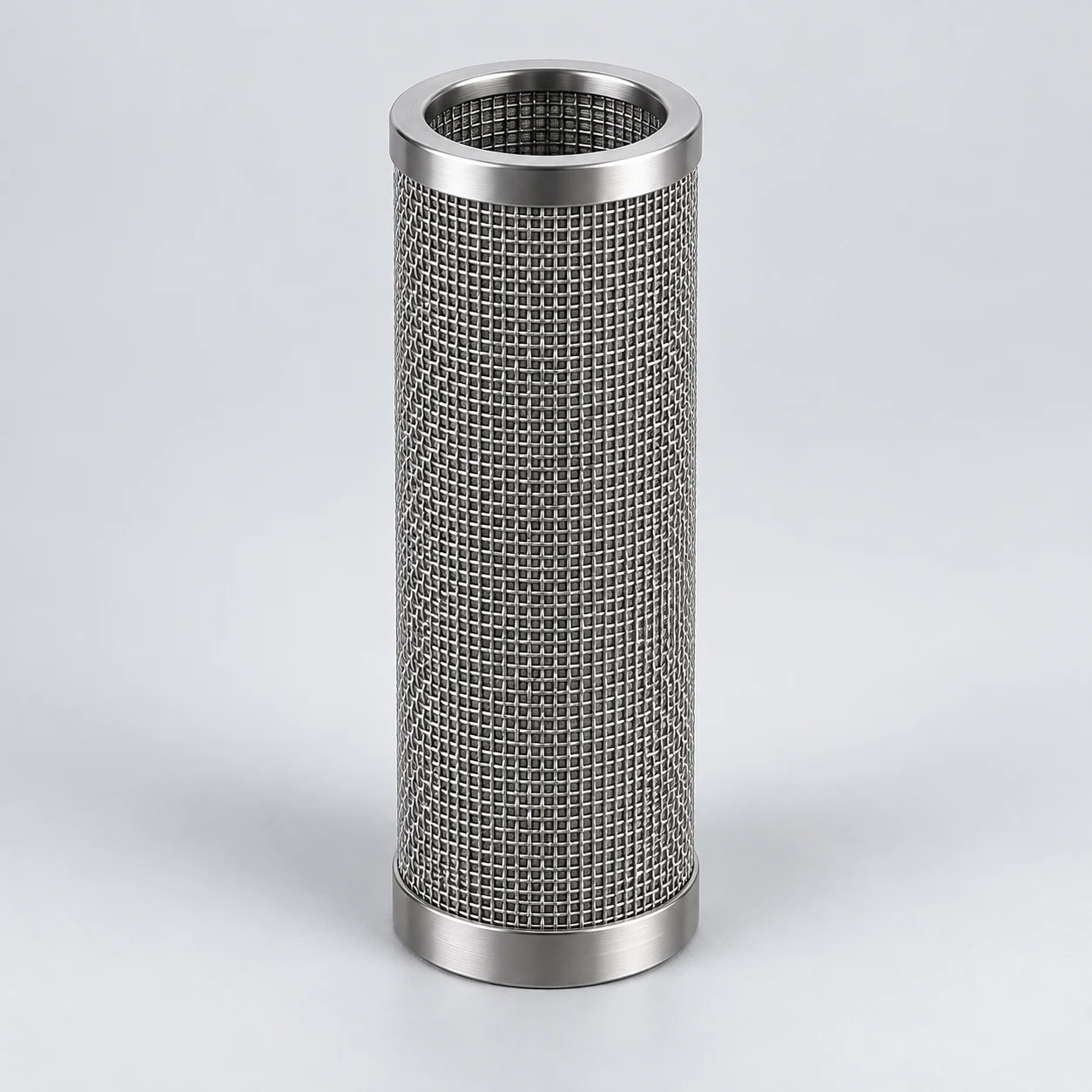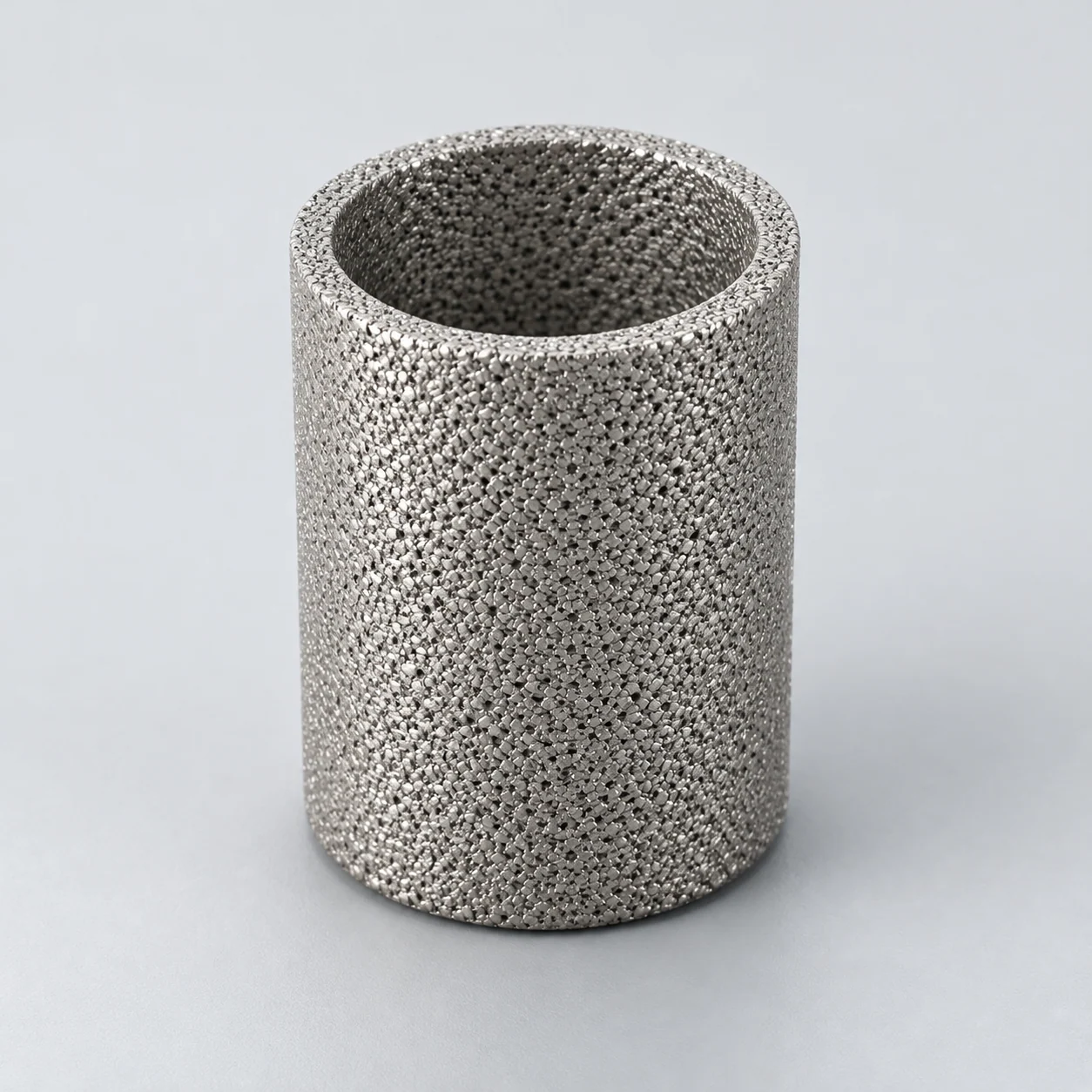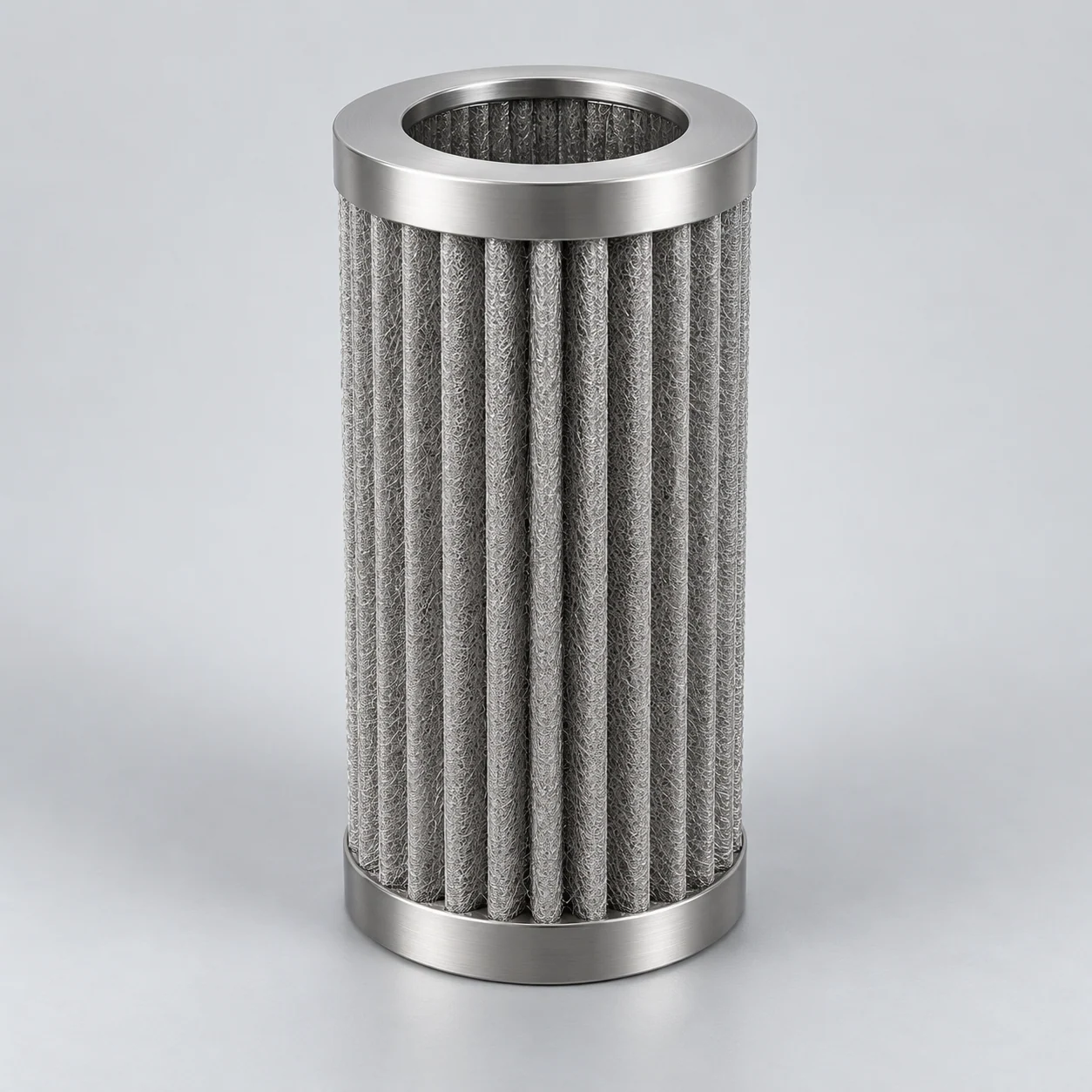
This guide describes material candidates and specification inputs. Availability, fabrication route, allowable temperature and differential pressure for a supplied element require an identified configuration, approved drawing and relevant evidence. Bulk-alloy datasheets are not porous-element certificates.
Material candidates and the question each one answers
The identifiers below help prevent ambiguous inquiries. They describe material families, not interchangeable procurement specifications. Confirm the exact grade, product form and manufacturing standard; sheet, wire, powder, weld metal and seal materials may differ.
On a small screen, scroll the table sideways to see every column.
| Material / identity | Candidate application | Critical verification before selection |
|---|---|---|
| 316L / UNS S31603 | A starting point for compatible process liquids, steam particle filtration and industrial service. | Full fluid chemistry, chlorides, temperature, cleaning chemicals and crevice exposure; confirm every wetted component. |
| 2205 duplex / exact UNS grade to be agreed | A chloride-service candidate when an austenitic grade needs further review. | Do not assume S31803 and S32205 are identical order specifications; review sintering/welding route, phase balance and corrosion evidence. |
| 2507 superduplex / UNS S32750 | A candidate for more demanding chloride environments. | Bulk-alloy corrosion data do not establish porous-media performance; verify fabrication, joints and actual process conditions. |
| 904L / UNS N08904 | A high-alloy austenitic candidate for selected acid-containing chemical processes. | Acid type and concentration, oxidising or reducing conditions, contaminants and cleaning exposure; not a universal acid-resistant grade. |
| C-276 / UNS N10276 | A nickel-chromium-molybdenum candidate for demanding chemical applications. | Identify the exact grade and wetted assembly; compare corrosion evidence with the actual mixture, temperature and contaminants. |
| Alloy 625 / UNS N06625 | A nickel-chromium-molybdenum-niobium candidate for selected corrosive or thermal applications. | Oxidation resistance is not an element temperature rating. Require media, joint, pressure-drop and cycle evidence. |
| Nickel 200 / N02200; Nickel 201 / N02201 | Commercially pure nickel candidates for selected reducing or caustic environments. | 200 and low-carbon 201 are separate grades; confirm chemistry, temperature and fabrication rather than ordering only “nickel”. |
| Commercially pure titanium / exact grade required | A candidate for compatible liquid prefiltration and selected corrosive media. | Specify grade, fluid chemistry, cleaning and contamination limits; assess fluorides, reducing acids, hydrogen and abrasive solids explicitly. |
| FeCrAl fiber alloy | A distinct route for selected thermally demanding fiber-media applications. | Require exact composition, atmosphere, oxidation/cycling data and the assembled-element limit. |
| FeAl intermetallic porous material | A separate porous-material route for selected hot-gas separation applications. | FeAl is not FeCrAl fiber felt. Verify composition, medium structure, atmosphere, dust and cleaning-cycle evidence. |
Filter material selection: specify the operating conditions
Use a normal operating case, a credible upset case and the cleaning case. Local concentration, deposits and stagnant regions can differ from the bulk liquid. A compatibility statement must name the conditions it covers.
On a small screen, scroll the table sideways to see every column.
| Input | Record it as | Why it matters |
|---|---|---|
| Medium composition | Components, concentration, pH where relevant, chlorides/halides and contaminants | The process name alone cannot define corrosion exposure. |
| Temperature and duration | Normal / maximum °C, exposure time and cycling | A short transient is different from continuous service. |
| Pressure and differential pressure | Operating/design pressure, clean/terminal/reverse ΔP with units | Housing pressure and media differential pressure are different limits. |
| Flow and solids | m³/h or mass flow; gas reference basis; viscosity; solids size and load | These determine area, loading and regeneration requirements. |
| Cleaning / regeneration | Chemical, concentration, temperature, time, flow direction and cycles | The cleaning exposure may govern material selection. |
| Element construction | Porous grade, dimensions, supports, end fittings, welds and seal identities | The weakest part of the assembly may set the usable limit. |
| Acceptance evidence | Material traceability, retention test basis, permeability and agreed inspection scope | Define what must be demonstrated for the offered design. |
Apply the material question to the four industries
Pharmaceutical and medical equipment: separate process prefiltration or powder recovery from validated sterile barriers and patient-contact functions. Neither titanium nor stainless steel is automatically sterilizing-grade, GMP-qualified or biocompatible in a supplied assembly. Chemical and petrochemical systems: review the reaction mixture and cleaning cycle together; catalyst recovery also needs retention and regeneration evidence.
- General industry: match water chemistry, dust abrasion or sample-gas composition to the specific element; include condensation and start-up conditions.
- Oil and gas: distinguish liquid catalyst fines, feed solids and dry gas particles. Sour-service or contractual material requirements need project-specific assessment; a generic alloy name is not compliance evidence.
What must be confirmed for the offered element
Ask for a drawing revision and a component-level material list before comparing quotations. The quotation should identify the porous medium, support, end connections, welds and seals, plus the test conditions behind retention, permeability and allowable differential pressure. A material certificate identifies material evidence; it does not by itself validate filtration efficiency or application suitability.
- Keep bulk-alloy temperature data, corrosion tests and porous-element limits separate.
- If a standard or application certification is required, name its scope and request evidence for the exact supplied design.
- Record unknown fields as open questions. Do not replace them with a maximum value from an unrelated configuration.