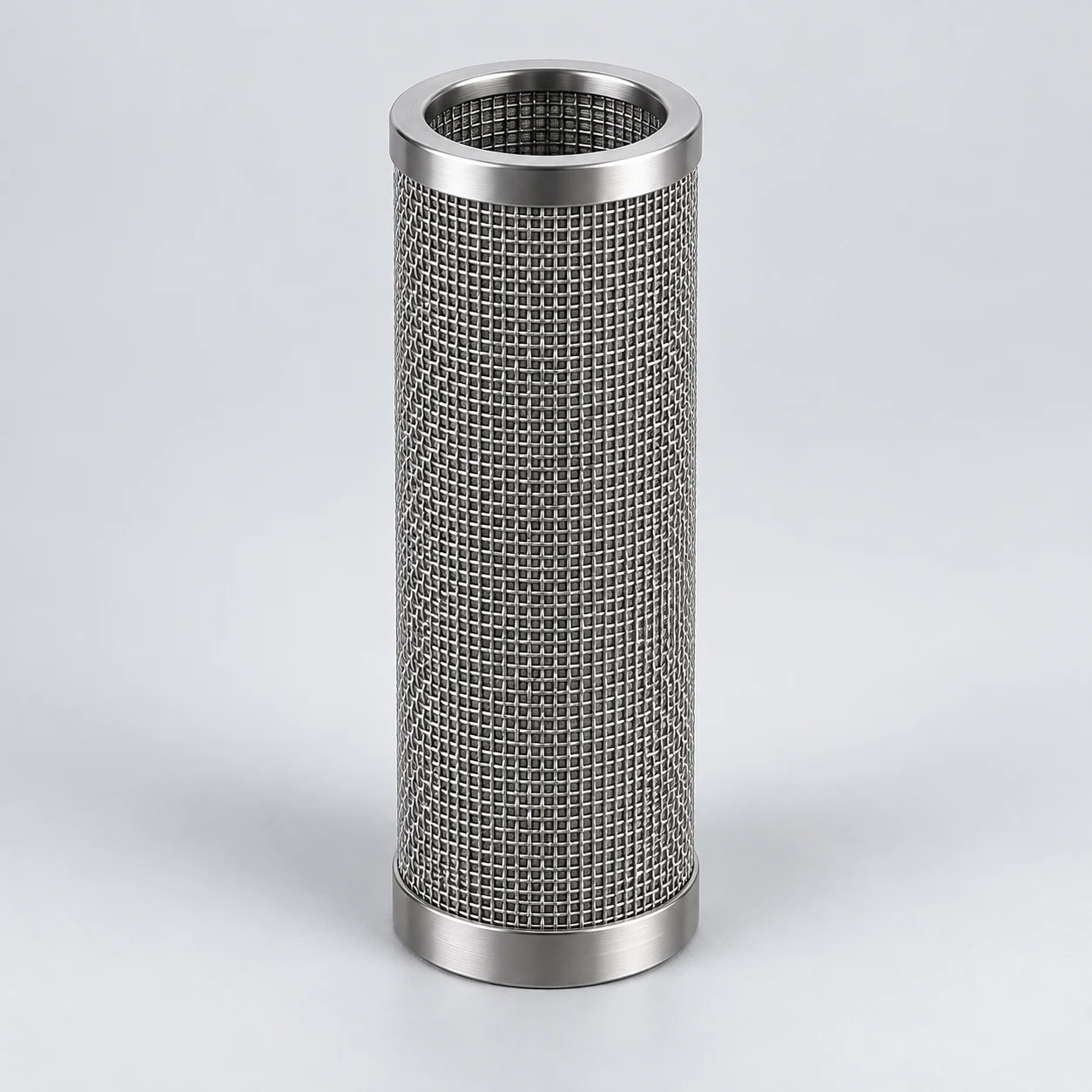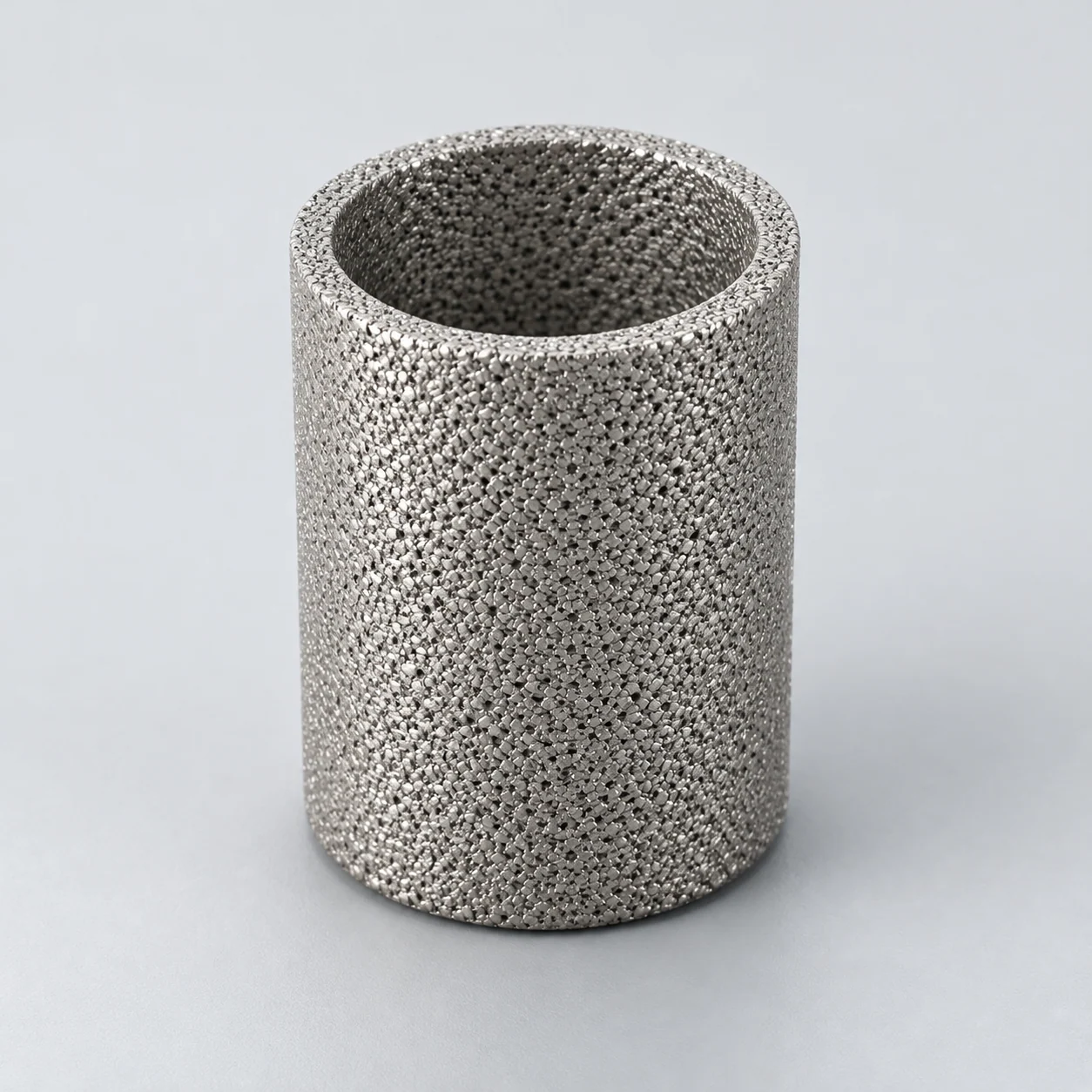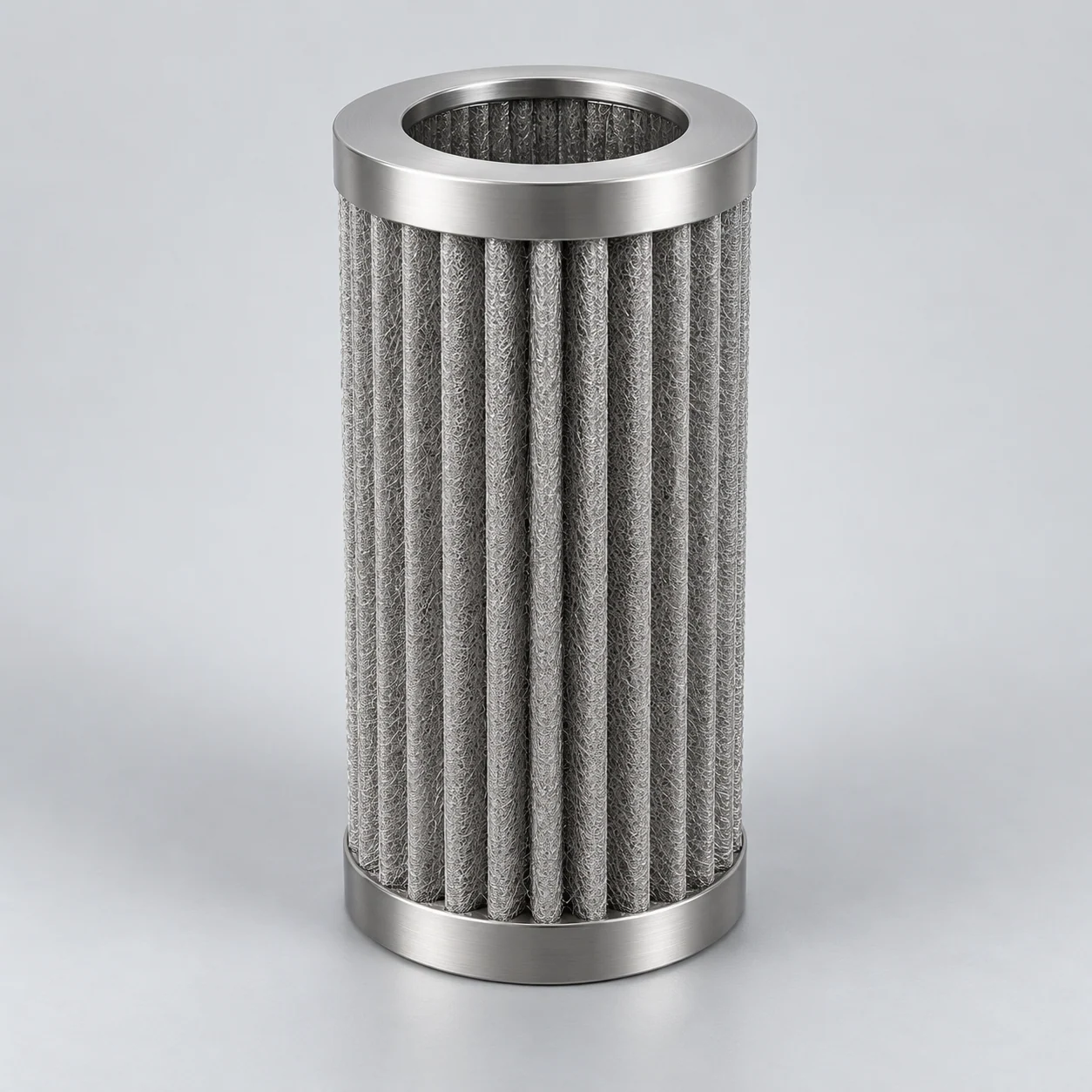
General engineering guidance for technical review. Examples explain the method and do not establish specifications for a supplied product.
1. Identify the material precisely
A purchase description should identify the applicable material specification and grade for the filtering medium, end fittings, supports and joining material. “Stainless steel” leaves too much unresolved. Even “316L” should be tied to the requested specification, product form and material documentation. A certificate for one component does not automatically identify the rest of the assembly.
316L is a low-carbon, molybdenum-alloyed austenitic stainless steel. Lower carbon content helps limit sensitisation associated with welding, but it does not make the material immune to chloride attack. Specify the applicable standard and exact grade, then assess the finished porous element, joints and surface condition in the intended process.
316L filter compatibility: define the exposure conditions
List the process liquid or gas composition, concentrations and significant impurities. State whether a concentration is by mass, volume or another basis. Include temperature, dissolved or entrained gases where relevant, and whether the exposure is continuous or intermittent. A label such as “chemical solution” does not allow a useful compatibility assessment, and a safety data sheet may not describe every impurity relevant to corrosion.
Create separate rows for production, startup, shutdown, draining, storage and cleaning. Retained process liquid can meet the next cleaning solution inside the assembly; the intended sequence and rinse endpoint therefore belong in the review. The worst exposure may be a short transition rather than the normal production condition. Record unknowns explicitly instead of treating nominal conditions as the full envelope.
3. Consider the mechanism, not just a corrosion rate
Chloride-containing environments can promote pitting and crevice corrosion; temperature, acidity and oxidising conditions are important factors. A low average material loss does not exclude severe local attack. Review contact regions, seals, deposits and weld-adjacent surfaces with the same care as the open filtering area.
There is no single chloride concentration that approves every 316L filter at every temperature. Do not turn a table for one solution or a laboratory critical-pitting result into a universal operating limit. Instead, ask which corrosion mechanism is being evaluated and whether the test environment represents the actual fluid, concentration, temperature, surface condition and exposure history.
4. Assess the porous assembly as supplied
A sheet-metal compatibility chart is a screening aid, not proof of performance for a porous filter assembly. Ask how the medium, supports, joints and seals are identified and inspected. For a welded construction, request the relevant fabrication and surface-condition information. Do not infer a suitable weld condition, cleaning state or seal compound solely from the alloy named in a product heading.
The functional acceptance question is broader than whether the part remains visibly intact. An assessment may also need to address changes in particle release, retained residues, flow resistance or leakage paths, according to the process. Define the relevant outcomes with the responsible engineer before evaluating a candidate. Avoid adding unneeded tests just to create a longer certificate package.
5. Turn a compatibility table into an evidence plan
A corrosion table for a controlled solution is a screening tool; real impurities, deposits and changing exposure can alter the result. Use it to identify questions and shortlist materials. If important uncertainty remains, agree a representative assessment with the engineering reviewer and process owner, stating the conditions tested and the limits of the conclusion.
A useful plan identifies sample form, preparation, actual or simulated medium, exposure sequence, measurements and acceptance criteria. Preserve the tested sample identity and record deviations. A successful material coupon result may justify the next stage of review, but it does not automatically validate the joints, seals, hydraulic performance or service life of the complete element.
6. Record the decision and the change triggers
The final review should state the accepted alloy and construction, the covered operating envelope, the evidence considered and any unresolved restrictions. If another alloy is proposed, request its own compatibility and fabrication evidence. “Higher alloy” is not a complete selection argument, and an alternative material does not establish that the intended element can be supplied or manufactured to the required configuration.
Retain the material specification, drawing revision and review record with the order. Changes to cleaning chemistry, water quality, temperature, process impurities or the proposed assembly construction should trigger a comparison with that record. For pharmaceutical or medical use, keep material compatibility separate from biocompatibility, extractables, microbial retention and process validation requirements.