This page covers particulate filtration of process steam. It does not establish clean-steam quality, sterile service, endotoxin removal or a certified temperature/pressure envelope for a supplied element.
Steam-filter element — supported mesh section

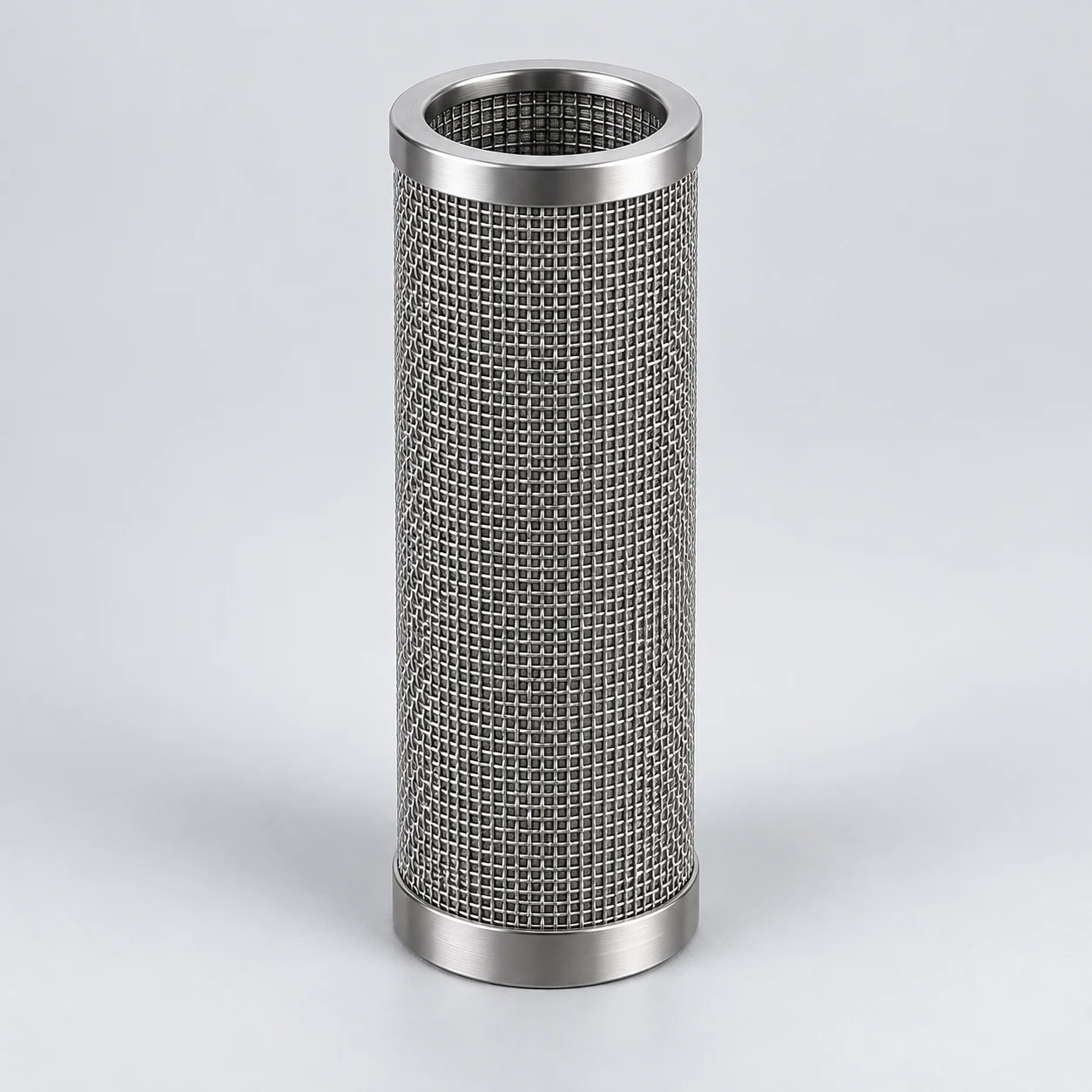
Steam-filter element — supported mesh section. Numbered connections, filtering medium, clean passage and closure are identified.
- Clean-side steam connection
The upper connection and seal separate incoming steam from the filtered-steam outlet.
- Supported mesh wall
The enlarged section separates the filter layer from its supporting layers.
- Filtered-steam passage
Steam that has crossed the supported mesh enters the bore; condensate drainage is a separate housing function.
- End closure
The closure prevents unfiltered bypass through the lower end.
Point-of-use steam particle filter
One selected equipment arrangement is shown to explain position and flow. Verify actual flow, connections, seals and operating sequence against the equipment drawing.

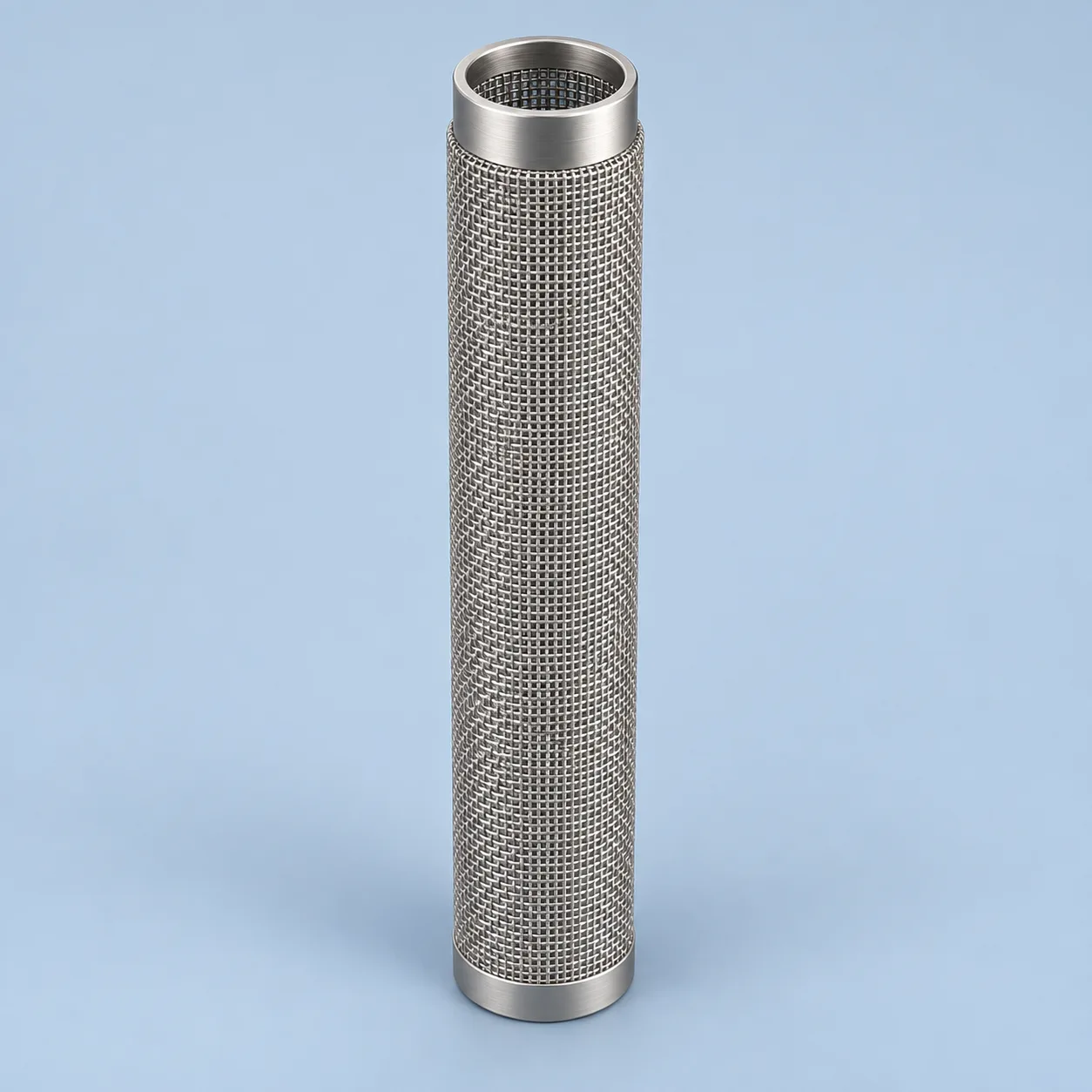
- Metal filter element
Steam crosses the porous wall in the selected outside-in arrangement.
- Seating and seal boundary
A controlled connection prevents feed from bypassing into the clean outlet.
- Filtered-steam outlet
The blue path is the filtered-steam route, not the condensate drain.
- Independent condensate drain
The dashed drain path represents condensate handling; the plant design defines the drain equipment.
Place the element within the steam system
A metal cartridge can be evaluated inside a dedicated point-of-use steam filter housing, with the separator, condensate removal, isolation and instrumentation reviewed on the plant's piping diagram. The element should not be expected to correct an upstream steam-generation or drainage problem.
Supported multilayer mesh is a candidate for removing suspended particles from process steam. Assess the filter layer, support, joints and seals together. The element must be matched to steam quality, condensate management and the required particle-retention test before a pharmaceutical installation is qualified.
Separate particles from steam, and condensate from the design question
Steam passes through the porous wall and solid contaminants are retained according to the agreed efficiency. The actual inlet, clean outlet and seal interfaces depend on the housing. Confirm flow arrows rather than assuming every cartridge is outside-to-inside.
Condensate can alter pressure loss and collect deposits. Review startup, shutdown, thermal cycling and drainage with the equipment designer. A cartridge's catalog temperature maximum cannot be combined with an unrelated housing pressure rating.
Steam-application information to specify
On a small screen, scroll the table sideways to see every column.
| Parameter | Unit or evidence | Selection requirement |
|---|---|---|
| Steam flow | kg/h; pressure and temperature | Normal, startup and peak demand; state whether pressure is gauge or absolute. |
| Steam condition | Saturated/superheated; condensate information | Include expected wetness and any process carryover. |
| Particle removal | µm plus efficiency/test basis | Agree the target contamination rather than treating grade as sterility evidence. |
| Allowable loss | bar or kPa across defined boundaries | Separate clean cartridge loss from the full housing/line loss. |
| Thermal and pressure limits | Assembly evidence and derating | Review element, welds, seals, housing and cycling together. |
| Connection and maintenance | Drawing in mm; access envelope | Confirm seating, bypass control, drainage and safe element removal. |
Evaluate the whole wetted material set
A 316L mesh proposal still needs the actual water chemistry, boiler-treatment carryover, cleaning agents and shutdown exposure. Review seal material and compression at steam conditions. If a higher alloy is proposed, ask which corrosion mechanism it addresses and whether supports and welded fittings use compatible materials.
Nickel-based alloys or 904L are review options for defined exposure, not a way to bypass plant water-quality control. Their availability in the required porous structure requires confirmation for the proposed element.
Acceptance and cleaning before routine service
Ask for the cartridge drawing, traceable alloy, dimensional checks, pressure/temperature basis, integrity or leak-check method and any relevant particulate test. Pharmaceutical contact requirements must be set by the user and supported for this assembly.
Record a clean pressure-loss baseline at a stated steam application. Compare it with inspected condition after cleaning; do not infer successful regeneration from a visibly clean outer surface. Define handling, storage and replacement criteria so maintenance does not reintroduce contamination.
- Provide the steam P&ID, housing model/drawing and existing element connection.
- State the downstream use, contamination concern and required documentary package.
- Keep particle filtration and any microbial or steam-purity validation as distinct acceptance requirements.
Specification and acceptance checks
Specify the installed steam assembly rather than selecting from a cartridge temperature label. Confirm the element, seals, housing and condensate arrangement at the same operating conditions; particulate filtration and sterile venting are separate requirements.
On a small screen, scroll the table sideways to see every column.
| Check | Specify | Acceptance record |
|---|---|---|
| Steam condition | kg/h, pressure basis, temperature and condensate | Piping diagram and operating envelope |
| Pressure boundary | Housing pressure–temperature basis; element differential pressure | Separate assembly and element records |
| Installation | Adapter, seating, flow arrows and drain position | Approved connection drawing |
| Service acceptance | Particle target and cleaning method | Baseline loss and post-cleaning check |
- Do not substitute a sterile-gas vent cartridge specification for a steam particulate application.
- Agree the evidence required for the downstream pharmaceutical process.
Prepare the specification for this application
Use these guides to resolve the next selection questions for this element. Each covers a separate part of the specification.
Product family: Sintered wire mesh filter elements
- Gas flow basis for sizing sintered metal gas filters
Identify the steam-flow basis and conditions at the point-of-use element.
- Sintered metal filter pressure drop and flow area
Allocate pressure loss across the element and housing at the required steam flow.
- How to clean sintered metal filters safely
Review the element, joints and seals under the proposed cleaning cycle.